I Am Cat
- 4.5
- Rating
- 10.00M
- Installs
- Free
- Price

 Analysis by App-foxy
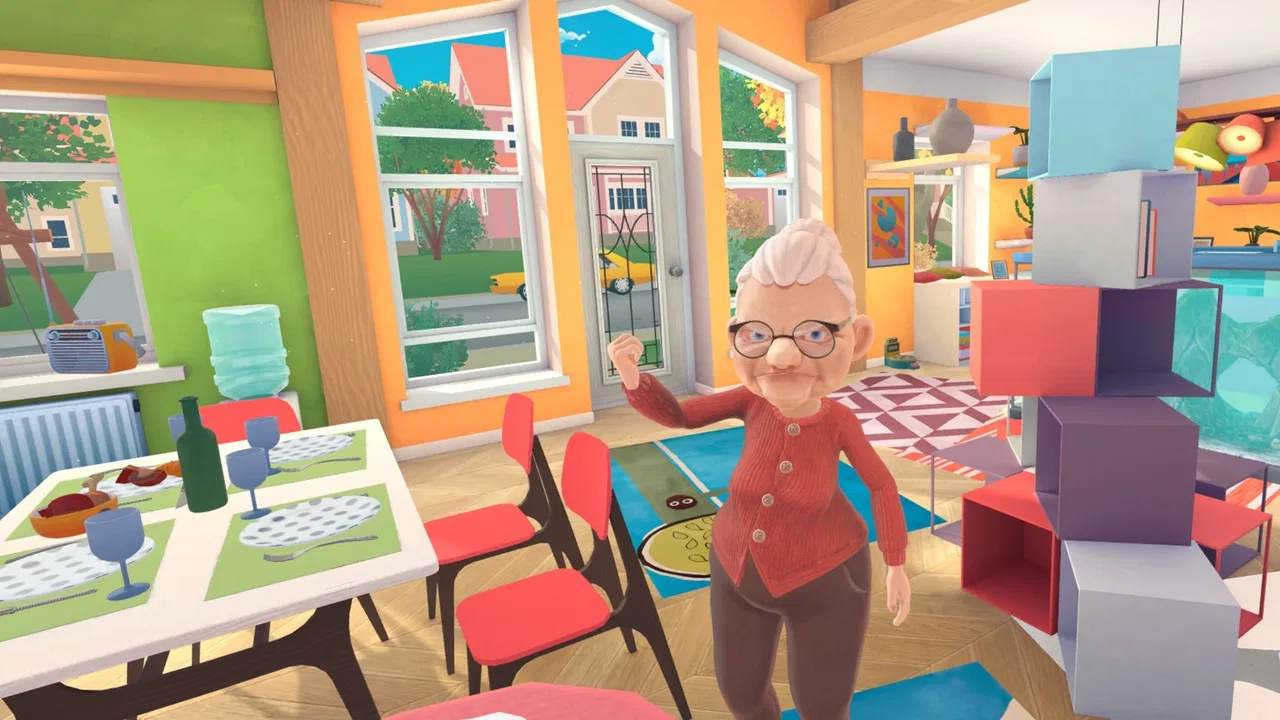
I Am Cat is the kind of simulation game I open when I want something silly, light, and a little destructive rather than a serious challenge. Estoty puts me in control of a mischievous kitty, and the appeal comes from turning ordinary spaces into opportunities for playful chaos. It is free to download, aimed at a Teen audience, and available for Android devices running version 8.0 or later. After spending time with it, I found a game that understands the comedy of cat behavior well, although its relaxed structure will not suit everyone.
What makes it stand out from a conventional pet game is the attitude. I am not mainly caring for a cat, decorating a home, or following a long story. I am looking at the world from a cat’s perspective and enjoying the reactions that come from being curious, intrusive, and slightly troublesome. That simple idea gives the game an immediately readable identity. If you have ever watched a cat knock something over for no obvious reason, the humor is easy to recognize.
The store presence is already substantial, with an average rating of 4.5 from around 161 thousand ratings and more than 10 million installs. Those figures suggest that the concept has reached a broad audience, but they do not replace personal experience. For me, the important question is whether the joke stays enjoyable after the first few minutes. The answer is mostly yes, provided you approach it as a casual sandbox-style distraction instead of a deep simulation.
You May Also Like

 Blood Strike: 2.5 Anniversary
Blood Strike’s Loadouts Turn Every Drop Into a Tactical Gamble
A close look at Blood Strike’s custom loadouts: how fast access to signature weapons reshapes its battle royale rhythm, rewards preparation, and narrows the gap between fights.

 Pandora - Music & Podcasts
Pandora’s Music Is Easy to Start, but Harder to Recover
Pandora’s strength is its low-effort path from a seed to a station. Its weak spot is how much confidence it asks you to place in connection, setup, and quiet recovery.

 8 Ball Pool
 Is Built on Rivalries, Rematches, and Routine
A close look at the rivalries, rematches, shared routines, and unanswered safety questions that turn a quick pool match into a persistent mobile community.

 Samsung Music
’s Quiet Strength Is Playing What You Already Own
Its reach comes less from spectacle than from dependable access to a personal library. That simplicity is both the app’s strongest retention engine and its ceiling.

 AccuWeather: Weather Radar
AccuWeather Review: A Quick, Clear Forecast for Everyday Decisions
For everyday plans, the best forecast is the one you can understand quickly. AccuWeather makes rain timing, radar, and local conditions easy to act on, with a few trade-offs.

 Hill Climb Racing
Why Hill Climb Racing Still Turns Crashes Into One More Run
A tiny car, a bumpy hill and one more upgrade: Hill Climb Racing keeps resurfacing because its simple chaos makes every near-miss feel personal.
More From Our News Desk



What the cat simulator feels like in everyday play
When I think about how this game fits into an ordinary day, I focus less on how long a session lasts and more on whether I can pick it up without needing to rebuild momentum. That makes the cat’s small-scale freedom an important part of its appeal: a quick visit can feel complete even when I stop before exploring everything. The next section looks at how that relaxed rhythm can change when progress or purchases start to influence my choices.
A playful premise that needs the right expectations
The first thing I noticed is that I Am Cat works best when I stop expecting a conventional objective-heavy game. Its pleasure comes from experimenting with the cat’s surroundings and seeing what kind of harmless trouble I can create. The activity is less about mastering a complex system and more about discovering amusing interactions at my own pace.
That makes it especially suitable for short sessions. I can play while waiting for an appointment, take a brief break from work, or relax before bed without needing to remember a complicated plot. A useful everyday routine is to treat each session as a small experiment: choose one area, look for objects or situations that invite interaction, and leave once the novelty starts to fade. This keeps the game feeling playful instead of turning it into a chore.
The trade-off is that players who need constant progression may find the experience loose. Simulation games often divide into two groups: detailed management experiences that reward planning, and relaxed sandboxes that reward curiosity. This game sits much closer to the second group. If you want resource optimization, a demanding economy, or a carefully structured campaign, another simulation title will probably give you more to think about.
Why the cat viewpoint matters
The cat perspective is not just a cosmetic theme. It changes how I read the environment. A normal room becomes a collection of tempting targets, awkward routes, and possible mischief. That shift is the game’s strongest design idea because it turns familiar surroundings into something slightly absurd.
I also appreciate that the humor does not require me to take the role seriously. There is no pressure to behave like a responsible owner or maintain a perfect routine. The fantasy is closer to being left alone in a space with unlimited curiosity. That makes the game approachable for younger players within its Teen rating, casual players who do not usually play simulations, and anyone looking for comedy rather than competition.
Still, the same perspective can limit the experience. Once I understand the basic rhythm of exploring and causing trouble, the surprise depends heavily on how many interactions remain interesting. This is where patience matters. I would not recommend downloading it expecting an endless stream of new ideas. I would recommend it to someone who enjoys revisiting a playful premise and finding amusement in small details.
Three practical ways I get more from each session
My first useful approach is to avoid rushing toward whatever looks most obvious. I spend a moment scanning the whole space before acting. That often makes the session more satisfying because I am choosing a little plan rather than tapping randomly. The game becomes a small puzzle of curiosity: what can I reach, what might react, and what would be funniest to disturb?
Second, I use short themed sessions. Instead of trying to do everything, I might focus on exploring corners, testing environmental reactions, or simply creating a sequence of increasingly ridiculous actions. This prevents the loose structure from feeling empty. It also gives me a reason to return without pretending that every session is a major progression milestone.
Third, I play with the sound and attention I can spare. In a quiet room, the comic timing and reactions are easier to appreciate. In a busy setting, I treat it as a visual toy and keep expectations lower. That distinction is important: the game’s charm comes from noticing what happens, so multitasking can make it seem shallower than it really is.
Progress, spending, and the pressure to continue
I find it useful to separate spending from the urge to keep playing: an optional purchase can be a deliberate choice, while continuing out of habit can quietly drain the fun. Because the game’s appeal rests on playful experimentation, I pay attention to whether I am still curious or simply chasing a sense of completion. That distinction also helps put questions of fairness in perspective, which the next section considers alongside comparisons with other kinds of mobile games.
Free access with a clear purchase boundary
I Am Cat is free, which makes it easy to try without committing money first. The listed in-app purchases range from $1.99 to $4.99 per item. That is the purchase context I would keep in mind before starting: the core download does not require an upfront price, while optional spending is part of the experience.
I do not see a reason to spend immediately. My advice is to play long enough to decide whether the basic mischievous-cat loop genuinely makes you smile. If it does not, a purchase is unlikely to solve that problem. If it does, then an optional item may feel like a way to support or extend an experience you already enjoy, but I would still treat it as a choice rather than a requirement.
The important fairness point is that the available purchase range alone does not tell me whether every item is cosmetic, convenience-focused, or connected to progression. I would not claim that the game is generous or aggressive without a clear view of how each purchase affects play. From a reviewer’s perspective, the safest conclusion is practical: try the free experience first, check the item description at the moment of purchase, and do not assume that paying automatically improves the humor or exploration.
Where pressure can appear in a relaxed simulator
Casual games can create pressure in subtle ways even when they are not competitive. A player may feel pushed to unlock something, repeat an activity, or buy an item simply because the free route begins to feel slower. In this game, I judge that pressure by asking whether I am still playing because the cat is entertaining or because I feel I have to finish a task.
That distinction helps me decide when to stop. If a session turns into repetitive checking rather than playful experimentation, I close the game and return later. This is not a title I would use as a daily obligation. Its strongest quality is spontaneity, and turning it into a checklist risks removing the exact charm that brought me in.
For parents, the Teen rating is worth taking seriously, especially when a child uses a device with payment access. I would review the purchase settings on the phone or tablet before handing it over. That is sensible for any free game with optional purchases, and it keeps the decision about spending with the device owner rather than with an impulsive tap during play.
Does spending change the type of experience?
My answer is that spending should be evaluated as an enhancement to a joke-driven simulation, not as an investment in a competitive advantage. There is no reason to approach this game like a contest where a stronger purchase determines who wins. The better question is whether an item adds enough enjoyment to justify its cost for you.
This also explains why I would skip purchases if I only want a quick novelty. The free entry is already useful for testing the concept. On the other hand, a player who becomes attached to the cat’s personality and returns often may consider a small purchase more reasonable. I would make that decision after observing my own play habits, not because the game creates an artificial sense of urgency.
Fairness, competition, and the limits of comparison
Since this is a personal simulation rather than a contest, I would judge fairness by whether the experience remains enjoyable without turning every decision into a purchase or a race. Comparisons are still useful, but only when they clarify what kind of play someone wants—not when they imply that every simulator should offer the same depth or structure. With that in mind, I turn to who is likely to appreciate this particular approach and who may prefer a different style.
A game that is not built around winning against others
Competitive fairness is less complicated here than in a multiplayer battle or ranked strategy game. I Am Cat is fundamentally a personal simulation experience. I am not measuring my skill against an opponent, and the fun does not depend on dominating a leaderboard. That means the usual concerns about pay-to-win advantages are not the main lens through which I judge it.
Instead, fairness comes down to whether the free version feels like a complete enough introduction and whether optional purchases interrupt the playful flow. I prefer games that let me understand their basic appeal before asking for money. This one benefits from that approach because its central idea is so easy to test: either the cat’s mischief is amusing to me or it is not.
Compared with a traditional virtual pet, this game feels less focused on responsibility and routine. Compared with a management simulator, it asks for less planning. Compared with a competitive mobile title, it offers a calmer and more private form of play. Those comparisons explain both its strength and its limitation. It is friendlier for casual experimentation, but it may feel thin to someone who wants long-term mastery.
Who should choose it, and who should skip it?
I would recommend it to players who like animal humor, physics-driven mischief, and games that can be enjoyed in small pieces. It is also a good match for someone who wants a change from combat, racing, or resource management. The cat theme gives it an approachable personality, while the simulation category provides enough interaction to make the setting feel more than a static joke.
I would skip it if your priority is a deep life simulation with detailed care systems, a serious narrative, or a demanding progression plan. I would also be cautious if you dislike repeating playful interactions after the initial surprise wears off. The game’s appeal is specific, and no amount of popularity can make that style entertaining for someone who wants a more structured challenge.
Another useful distinction is between playing alone and showing it to friends. I found the game easier to enjoy as a personal comedy sandbox, but its mischievous premise can also work well when someone nearby wants to watch what happens next. It is not something I would choose for a formal multiplayer night; it is better suited to passing a device around briefly or sharing a funny moment.
Small decisions that improve the experience
I recommend keeping expectations modest during the first session. Do not judge it as though it were competing with a large management game. Give the cat’s viewpoint time to work, explore rather than rush, and notice whether the environment encourages you to try one more interaction. That first feeling is more informative than the install count or rating.
I also suggest separating curiosity from completionism. If I try to exhaust every possibility immediately, the game can become mechanical. If I let myself wander and stop when the comedy fades, it remains a pleasant break. This is one of the less obvious trade-offs: the game rewards a relaxed player more than an efficiency-minded one.
Finally, I would keep purchases deliberate. The individual price range is visible, but the value depends on how often you return and what the item changes for your play. I would never buy simply to overcome boredom. I would buy only if the free experience had already proved that I wanted more of this particular cat simulator.
What I can judge with confidence
Estoty has made a clearly identifiable simulation game rather than another generic mobile time-filler. The central fantasy is easy to understand, the tone is playful, and the free entry makes experimentation straightforward. The current version is 1.1.5, and the game has attracted a large audience, with more than 10 million installs. That reach is encouraging, but my recommendation still depends on your preferred style of play.
I can also say that the purchase question deserves a measured answer. Optional items cost between $1.99 and $4.99 each, so the game is not entirely separate from mobile spending. At the same time, the right way to approach it is not to assume that payment is necessary or that it automatically creates an advantage. Test the central cat fantasy first, read each item carefully, and decide based on actual enjoyment.
There are also limits to what I would promise. I would not present it as a substitute for a detailed pet-care game, a serious simulation, or a competitive title. Its value comes from atmosphere, comedy, and the freedom to behave like a troublesome cat. If those qualities are exactly what you want, the lack of heavy systems can feel refreshing. If they are not, the same simplicity may feel repetitive.
My verdict after living with the mischievous cat
The best reason to try I Am Cat is that it offers a very specific kind of harmless chaos without demanding a major time commitment. I enjoyed it most when I treated each session as a short visit to a playful world rather than a campaign I had to complete. The cat viewpoint gives familiar spaces a funny new purpose, and the free price makes the decision to test it easy.
My recommendation is strongest for casual players who want an amusing simulation with a clear personality. I would especially point it toward someone who likes animal games but does not need intensive care mechanics, or someone who wants to unwind with small experiments instead of battles and rankings. The Teen rating and optional purchases mean I would set reasonable device controls before sharing it with a younger player.
My trust verdict is positive but practical. I trust the game as a free way to sample its mischievous-cat concept, and I appreciate that the spending range is visible rather than hidden behind a vague promise. I would not spend until the free play had earned that decision, and I would not confuse a high rating with proof that every player will enjoy the same loop.
In short, I Am Cat is worth downloading if playful destruction, animal comedy, and short simulation sessions sound appealing. It is not the right choice for deep management, intense competition, or carefully plotted progression. I would install it, explore without rushing, and keep it as a light diversion—then decide whether any optional purchase adds genuine fun rather than merely extending time in a game I have already outgrown.
FAQs for I Am Cat
01What is the main objective of I Am Cat?
I Am Cat is a simulation game where players experience life as a cat. The main objective is to explore the environment, interact with objects, and complete various cat-like activities. Players can enjoy the freedom of roaming as a feline, fulfilling tasks that mimic a cat's daily life, such as hunting, playing, and socializing with other animals.
02Is I Am Cat suitable for all age groups?
Yes, I Am Cat is designed to be family-friendly and is suitable for players of all age groups. The game features simple controls and engaging gameplay that can be enjoyed by children and adults alike. There’s no graphic content, making it a safe and fun experience for everyone, allowing players to relax and enjoy the world from a cat’s perspective.
03Does I Am Cat require an internet connection to play?
I Am Cat offers both offline and online modes. While an internet connection is not necessary to play the core elements of the game, some features such as updates, in-game purchases, and social interactions may require internet access. This flexibility allows players to enjoy the game anytime, whether they are connected to Wi-Fi or on the go.
04Are there in-app purchases in I Am Cat?
Yes, I Am Cat includes in-app purchases that allow players to enhance their gameplay experience. These purchases can be used to acquire special items, customize your cat, or unlock additional content. While these purchases can add to the enjoyment, they are not required to progress in the game, ensuring a balanced experience for all players.
05How can I customize my cat in I Am Cat?
Customization is a key feature in I Am Cat. Players can personalize their feline friend by choosing from a variety of fur colors, patterns, and accessories. As you progress, additional customization options become available, allowing players to create a unique cat that reflects their style. This feature adds a layer of personal connection to the gameplay.
Pros
- Engaging graphics and animations.
- Simple and intuitive controls.
- Creative storyline with twists.
- Regular updates with new content.
- Minimal ads for uninterrupted play.
Cons
- Limited customization options.
- Requires internet for some features.
- Can be repetitive over time.
- High battery consumption.
- In-app purchases can be pricey.

I Am Cat
Gallery